
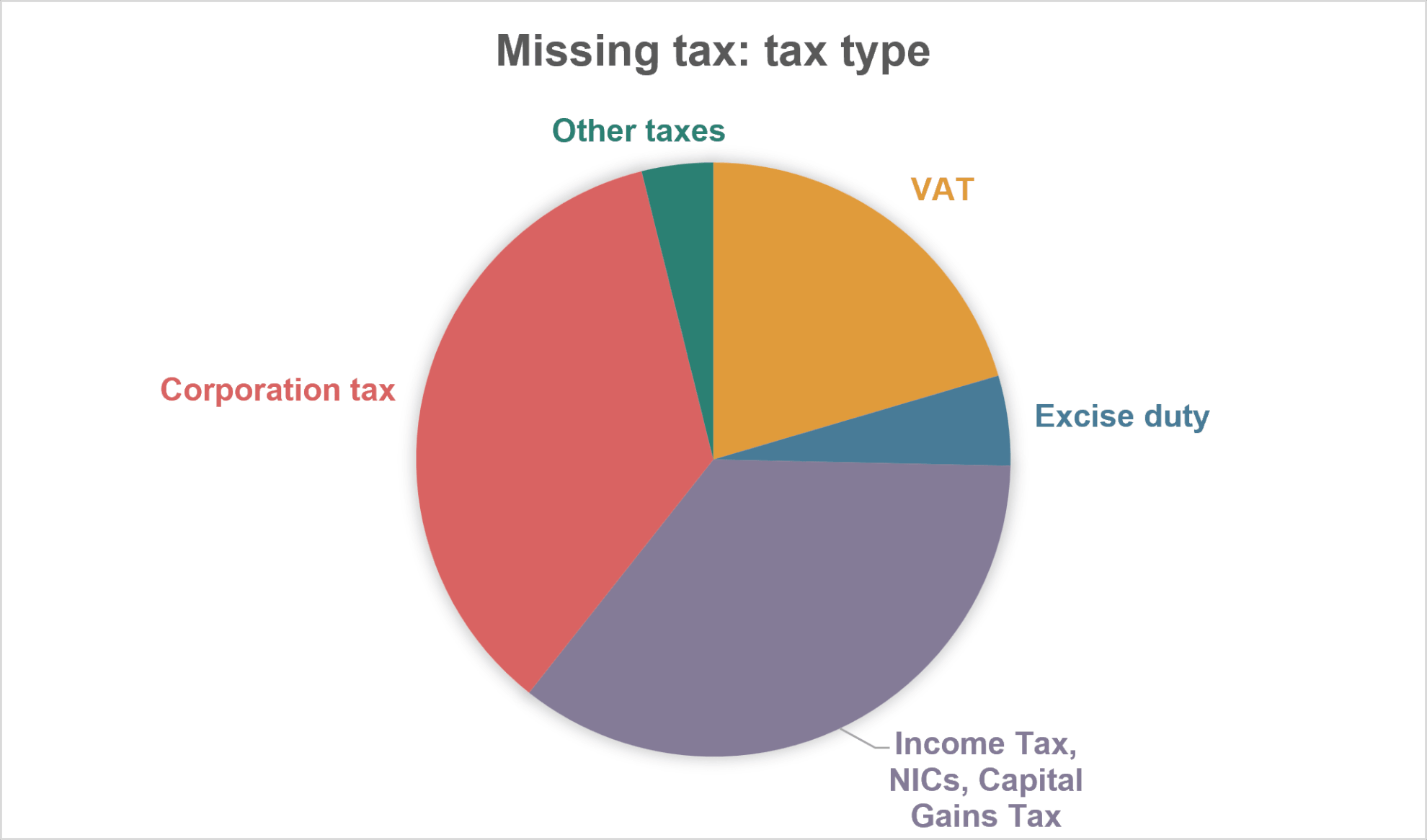
New HMRC research has highlighted the scale of unpaid tax, with the estimated amount outstanding reaching £59.2 billion.
That equates to around £850 for every person in the UK. In the wider context of UK tax, £59.2 billion represents:
HMRC’s estimate of the ‘tax gap’ in 2024/25, literally meaning the difference between the tax expected to be paid and what is received by the Treasury.
- £8.6 billion less than the total extra tax forecast to be raised by Rachel Reeves in her two Budgets while Chancellor.
Inevitably, the tax gap is an estimate, but it is one that HMRC has calculated each year since 2005/06. Back then it was 7.5% of all tax due; the latest figure is 6.4% for 2024/25. HMRC illustrates the sources of missing revenue in a variety of ways.
In 2024/25, HMRC collected £48 billion in ‘compliance yield’: extra tax raised by investigations, inquiries into returns and other revenue protection measures. Narrowing the tax gap regularly features in the list of Budget measures, not least because it appears to be pain-free extra cash. The government’s Spending Review 2025 allocated £1.7 billion to HMRC to fund 5,500 more compliance and 2,400 debt management staff. In total, measures announced by the government since the Autumn Budget 2024 aim to reduce the tax gap by £10 billion a year by 2029/30.
To a large extent, whether that goal is achieved will depend on reducing the tax that HMRC fails to collect from small businesses, around half of which is corporation tax. This is a perennially difficult area for HMRC because of the number of small businesses in the UK, which the government estimates at about 5.6 million (based on enterprises with less than 50 employees). At the opposite end of the spectrum, there are fewer than 8,500 large companies (250 or more employees). For HMRC, there comes a point when compliance work on small businesses is simply not cost-efficient.
One consequence is that HMRC will continue to push for more timely information from taxpayers – for example, the roll out of Making Tax Digital for Income Tax. Similarly, you can expect to see more proposals for reducing the time between receiving income and paying the tax due on it – such as the recently announced plans for accelerating payments on account.
Tax treatment varies according to individual circumstances and is subject to change.
The Financial Conduct Authority does not regulate tax advice.
Need support with your tax affairs?
With HMRC continuing to focus on reducing the tax gap, keeping your tax affairs accurate, compliant and up to date remains essential.
Our tax specialists can help you understand your obligations, identify potential risks and make sure you are taking the right steps to stay on top of your tax position.
Speak to our team for expert tax advice.



Comments are closed.