
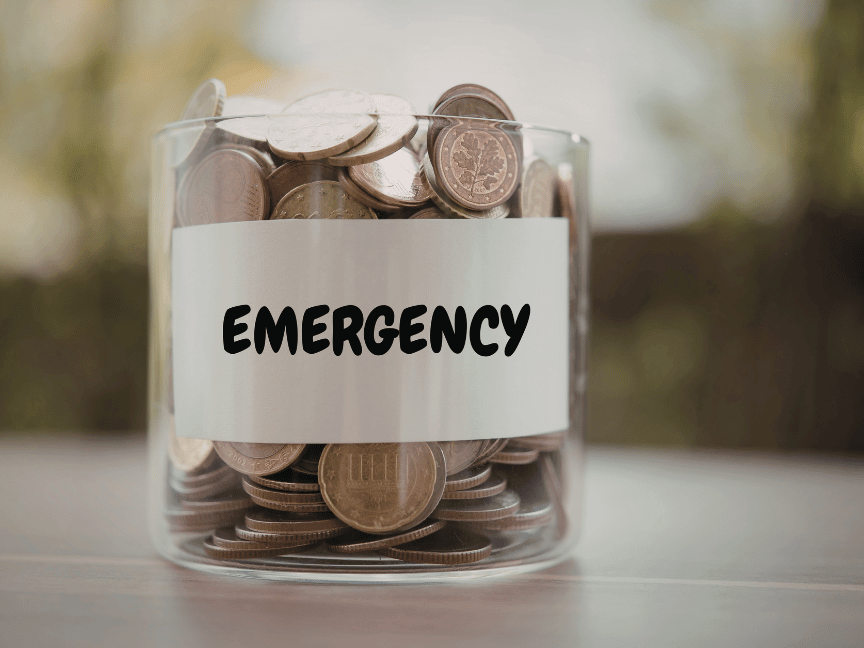
Do you have a rainy day fund? Think again, if you don’t – where you hold your cash matters.
A common piece of financial advice is that you should have enough cash in reserve to cover at least three months’ essential regular outgoings, and ideally up to six months. That means expenses like your mortgage or rent, food, council tax and utility bills, rather than non-essential spending.
Rainy day money needs to be available quickly – in practice it may be required to cover one sudden big bill. It should be placed somewhere that offers instant access, with no penalties or risk of capital loss. Rainy day money is thus about cash savings not investment. Two obvious options are:
- Easy access accounts. There are hundreds of instant access accounts available, ranging from those which can only be opened and managed via a mobile to the traditional High Street account. The best interest rates – over 4% at the time of writing – are to be found from the smaller deposit takers. Their names may be unfamiliar, but provided the institution is a UK institution covered by the Financial Services Compensation Scheme (FSCS), your deposit is protected up to £120,000 (£240,000 for joint accounts). The one point to watch: that FSCS cover is per banking license, and some banks have multiple brands (e.g., Lloyds Bank’s license also covers Halifax).
- Cash ISAs. Cash independent savings accounts (ISAs) will be subject to new restrictions for the under-65s from next April, but in 2026/27, you can still place up to £20,000 in a cash ISA. The ISA framework means no tax on the interest, although the personal savings allowance (£1,000 for basic rate taxpayers and £500 for higher rate taxpayers) means your interest on non-ISA deposits may also be tax-free. ISAs cannot be jointly held, which is a drawback for couples. For them, joint rainy day accounts make more sense so that either can have access.
You should regularly review your cash reserves to check you are earning a competitive interest rate and have the right level of reserve. Excess rainy day money could be an investment opportunity missed.
Get in touch with us by calling 0114 266 4432 or email info@smh.group for more information.
The value of your investment and any income from it can go down as well as up and you may not get back the full amount you invested.



Comments are closed.